
AI-Driven Inventory Optimisation: Consolidating Redundant Stock Without Touching the ERP
In pharma and MedTech warehouses, duplicated, technically identical items tie up capital and space without showing up in the ERP. How feature-based consolidation with AI makes redundant stock visible, without any intervention in the validated system.
Entourage Editorial Team
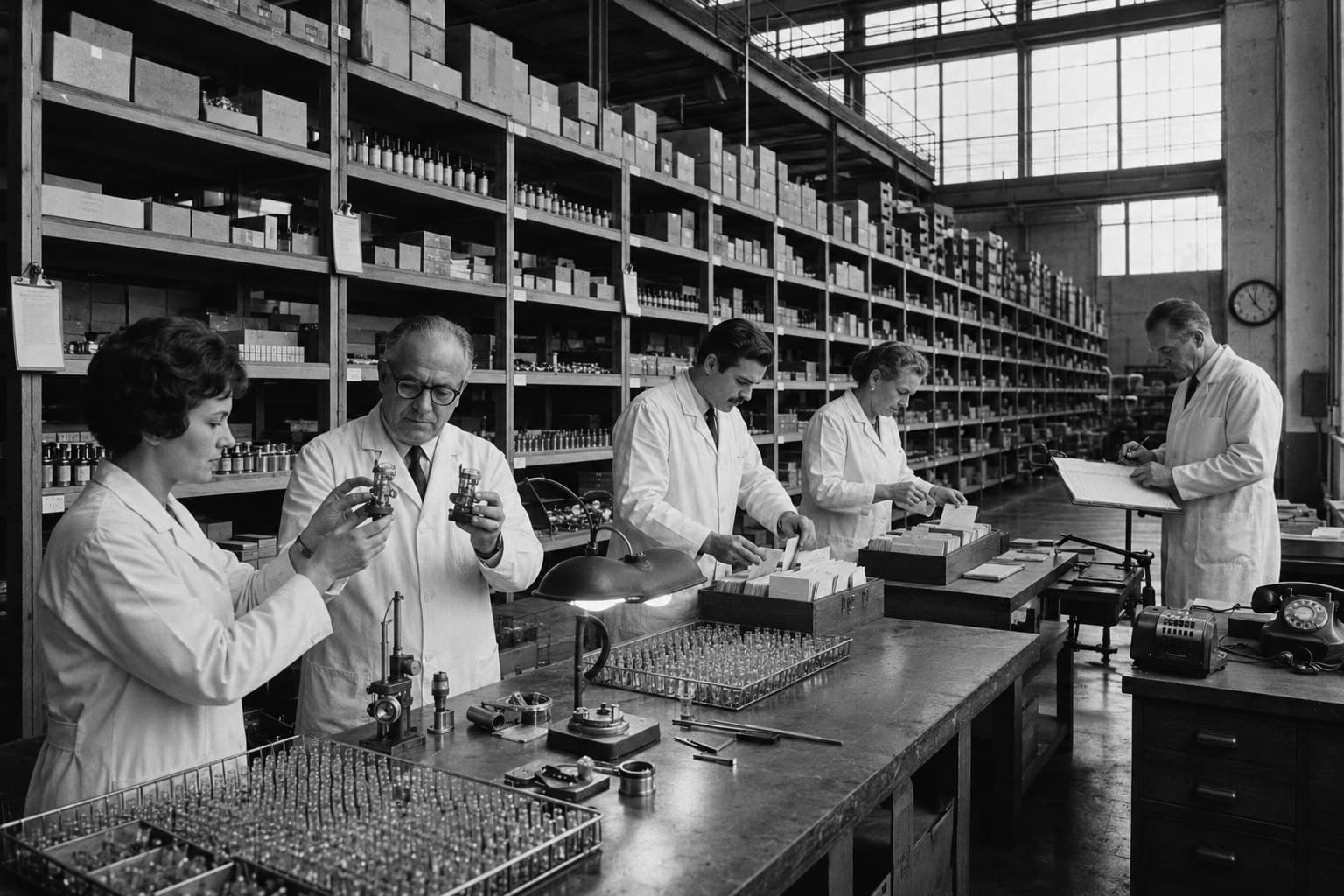
In pharma and MedTech warehouses, a silent cost block arises that does not appear as a problem in the ERP system: the same item, or a technically equivalent one, is maintained, procured and stocked under several material numbers. Each number on its own is set up cleanly. Taken together, these duplicates tie up capital, warehouse space and safety stock without any metric pointing to it.
Redundancy Is a Data Problem, Not an ERP Problem
The reflexive route to a solution is a master data or ERP project. In regulated environments, that is precisely the most expensive path: the ERP is a validated system, every change falls under change control according to Annex 11 of the EU GMP Guidelines and entails evidence, testing and approvals. The real lever, however, does not lie in the system but in the data: whether two material numbers denote the same item is decided by their characteristics and technical properties, not by a field that the ERP reconciles on its own.
Feature-Based Matching Instead of Number Comparison
An AI-driven inventory matching approach starts at this point. Instead of comparing material numbers or free-text descriptions, it analyses items by their characteristics and technical properties and thereby identifies identical and similar parts that are maintained as independent positions in the ERP. The result is a reliable candidate list for consolidation: which items can be merged, and which are only similar and therefore need to be reviewed.
The mode of operation is decisive: the analysis works alongside the existing ERP, without adapting or changing it. This leaves the validated system untouched, and the evaluation itself does not trigger any change control on the ERP. Consolidation produces several effects:
- Less tied-up capital, because redundant parts are deliberately merged rather than stocked multiple times.
- Greater planning reliability, because purchasing and production recognise duplicates early and avoid double orders.
- Forward-looking planning, because new projects build on a cleaned-up, consolidated item master instead of carrying the redundancy forward.
Why the Route Without System Intervention Is the Pragmatic One
In a non-regulated operation, the question of validation effort would be secondary. In pharma and MedTech it is central: high safety stocks are often intended here for regulatory or supply reasons, and every change to the leading system must be justified and evidenced. An analysis that runs outside the ERP and only supplies it with a consolidation recommendation avoids this effort without lowering data quality. It creates transparency about the actual stock before any decision on interventions in the system even has to be made.
How Entourage Supports You
We combine feature-based matching with the industry-specific understanding of when two items are truly interchangeable in a regulated environment and when an apparent similarity conceals a deliberate differentiation. From the analysis we derive a prioritised consolidation list, accompany the technical review of the candidates and integrate the result into the existing procurement and planning logic. In this way, an invisible cost block becomes a concrete, verifiable savings potential, without the validated ERP system having to be touched.
Relevant for your project?
Similar questions in your current project?
In a first call we clarify what is specifically relevant for your situation, without obligation.
Request a call →Life Science Journal
Regulatory updates, straight to your inbox.
New requirements, authority decisions and practice notes. Once a month, unsubscribe any time.
Regulations & standards considered
- EU GMP Guidelines Annex 11 (Computerised Systems)
Related projects
All case studies →

Sources
- EU GMP Guidelines Annex 11: requirements for computerised systems and their change control
- https://theentourage.de/ki-gestuetzte-lageroptimierung/ (original Entourage article)
Related insights
All insights →
Your project
Have a concrete project?
Briefly outline your situation. We'll respond with an initial assessment, usually within one business day.
Prefer direct? +41 61 271 23 80
info@theentourage.ch
- Reply usually within one working day
- 4 offices: DE · CH · IT · US
- 100% life sciences