
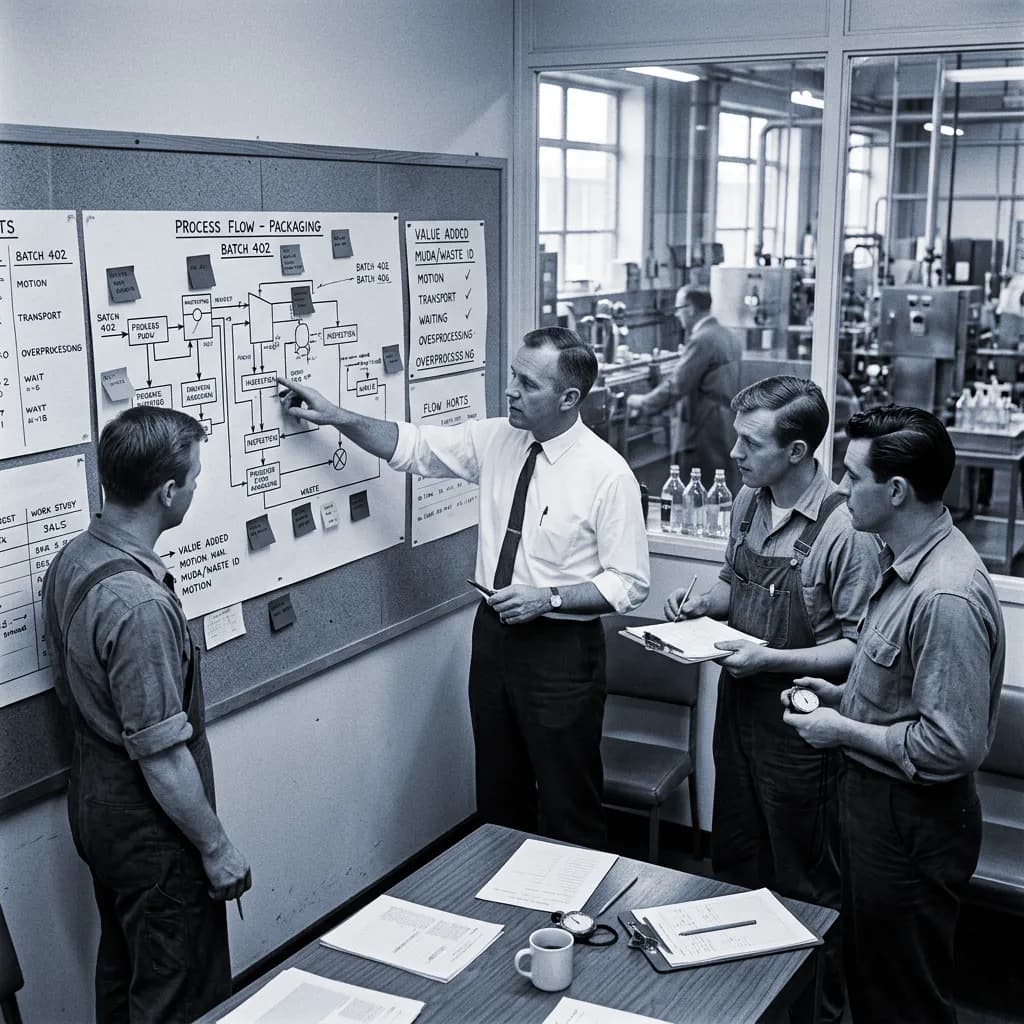
How do pharma, biotech and MedTech companies optimize their processes with Lean Six Sigma without jeopardizing GMP status?
We run Lean transformations and Six Sigma projects following DMAIC in regulated manufacturing and laboratory environments and document every improvement in a GMP-compliant way. Where improvement and change management interlock from the start, an effective measure does not later fail on an unapproved intervention in a validated process.
Overview
Which efficiency problems arise in regulated manufacturing and laboratory environments?
DMAIC and Lean project support in the GMP environment · change control per EU GMP Guide, documented in line with ISO 13485:2016 and ISO 9001
Last updated: October 4, 2026
Waste is often visible in GMP processes, yet every corrective measure intervenes in a validated state and must run through the quality system's change control. That is what sets Lean Six Sigma in a regulated environment apart from general industry: the method is the same, but its anchoring in the Pharmaceutical Quality System per ICH Q10 is not.
- Improvement measures are implemented bypassing change control: an effective Lean idea stays ineffective if the change to the validated process is not assessed and approved through the change management process of the EU GMP Guide (EudraLex Volume 4).
- Batch yields and process capability deviate from target values without any systematic root cause analysis in place. Variation is handled reactively via CAPA instead of being explained on a data basis through the Measure and Analyze phases of a DMAIC project.
- Manual process steps generate high error and rework rates, and with them documentation and deviation effort that overlays the actual value stream.
- Lean initiatives fail due to a lack of employee buy-in and a risk understanding that is not linked to ICH Q9(R1) (Quality Risk Management). Improvements only hold if risk assessment and accountability are part of the Control phase.
Services
How we support you
Lean transformation & value stream mapping
Value stream mapping for manufacturing and laboratory processes, identifying the types of waste in the GMP environment. The deliverable is the current and future state value stream map with a prioritized action list, every change to the validated process documented with its change control reference.
Six Sigma belt programs & training
Green Belt and Black Belt training for internal teams, tailored to life sciences environments, including project tutoring and certification support. The deliverables are training materials, completed candidate project work and a training record for the QM system.
How we work together
What it comes down to
Lean Six Sigma rarely fails in a regulated environment because of the method; it fails because every improvement is also a change that needs approval.
Waste that is visible on the shop floor can be named quickly, yet every intervention in a validated process is a change in the sense of the EU GMP Guide (EudraLex Volume 4) and must be assessed and approved through the change control system before it takes effect.
Teams that only discover this interlocking in the Improve phase have merely shifted the bottleneck: the measure is ready, but the approval is missing. That is why we tie the risk assessment per ICH Q9(R1) and the change control record to the Define phase from the start, not just to implementation.
The next hurdle follows after project close. The Measure and Analyze phases deliver the data basis that makes an improvement defensible in an audit at all, but the target state is only sustained through the Control phase, and that does not end with handover.
It ends with anchoring the new metrics in the Pharmaceutical Quality System per ICH Q10 and assigning an owner in the line organization.
For MedTech and IVD manufacturers the same logic runs through the QM system per ISO 13485:2016, and in areas that are not GxP-regulated through ISO 9001. Without this anchoring, the process reverts to its old state, and the documented improvement becomes an open gap at the next surveillance audit.
Our approach
Our approach
Step
Result
Define
A scoped problem with a project charter, defined scope and affected validated processes, aligned with QA.
Measure
A reliable data basis for the current state: process capability, yield and error rates measured rather than estimated.
Analyze
Verified root causes instead of assumed symptoms, derived on a data basis and risk-assessed per ICH Q9(R1).
Improve
Implemented measures, each assessed, approved and documented through the change control system of the EU GMP Guide.
Control
A secured target state with a control plan, KPI anchoring and handover to the line organization and the QM system per ICH Q10.
Common pitfalls
Where projects commonly fail
Improvements are implemented bypassing the change control system.
If a validated process is altered in the Improve phase without formal assessment and approval per the EU GMP Guide (EudraLex Volume 4), it surfaces at the latest in the GMP audit and wipes out the efficiency gain. The measure has to be rolled back or revalidated after the fact.
The Measure phase is skipped because the solution appears to be a given.
Without a reliable baseline of current state data, effectiveness cannot be demonstrated later, and the Control phase is left without a reference point. A DMAIC project without a clean baseline is not defensible in a regulated environment.
Risk assessment is treated as a formality instead of being conducted per ICH Q9(R1).
Without a risk-based justification for the intervention in the process, you cannot show QA and the inspector why the change does not jeopardize product protection, which blocks your own approval.
The Control phase is ended at project close.
Without anchoring the new metrics in the Pharmaceutical Quality System per ICH Q10 and without an owner in the line organization, the process reverts to its old state, and the documented improvement becomes an open gap at the next surveillance audit.
Belt training is delivered without real project work.
A Green or Black Belt certification without a completed project on the candidate's own process produces method knowledge with no impact; the training record in the QM system remains without a demonstrable result.
Supply Chain & Technical Operations
Do any of these pitfalls apply to you?
In a first call we assess your situation and say what needs clarifying first in your case. Without obligation, reply usually within one working day.
FAQ
Frequently asked questions
Sources
- EudraLex Volume 4, EU Guidelines for Good Manufacturing Practice (GMP), Chapter 1 (Pharmaceutical Quality System)
- ICH Q9(R1), Quality Risk Management
- ICH Q10, Pharmaceutical Quality System
- ISO 13485:2016, Quality management systems for medical devices
- ISO 9001:2015, Quality management systems
Image notice: The images on this page were generated using artificial intelligence. They do not depict real people, places, or events.
Life Science Journal
Regulatory updates, straight to your inbox.
New requirements, authority decisions and practice notes. Once a month, unsubscribe any time.
Case Studies
What this looks like in practice
More projects on this topic
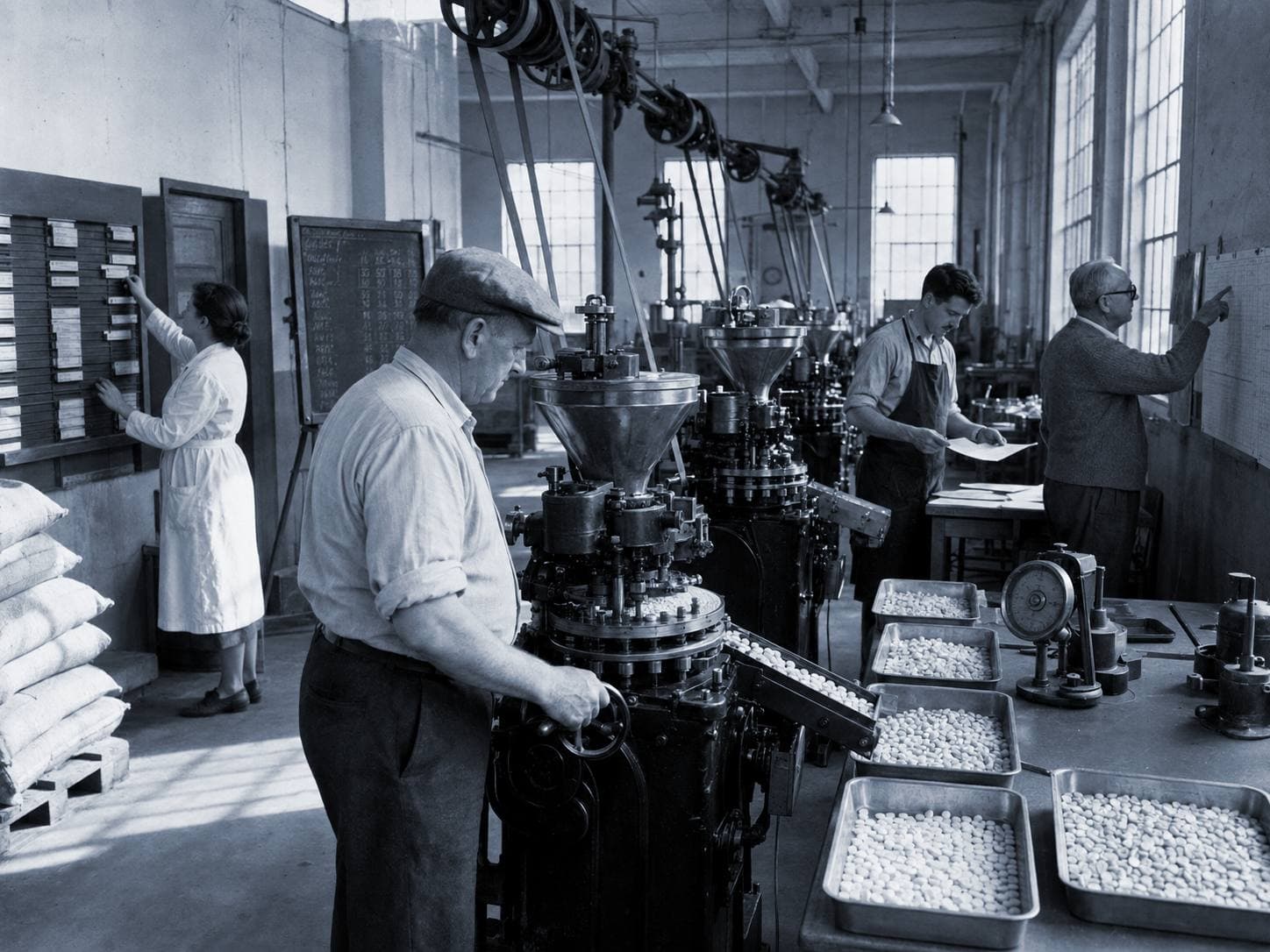
- Lean Six Sigma in Sterile Filling and Packaging→
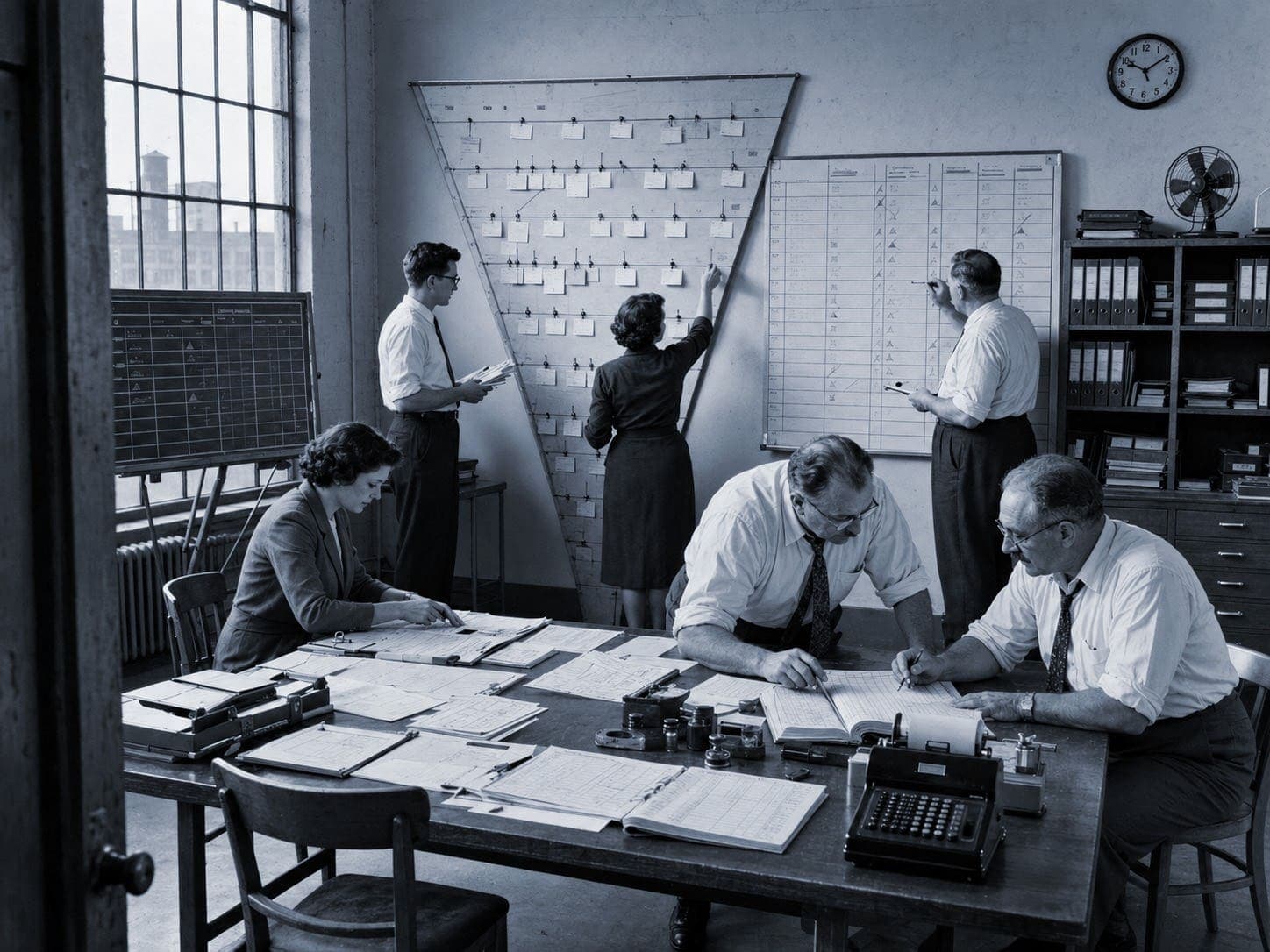
- OEE and Output Improvement for a Pharma and Medtech Manufacturer→
- OEE Optimization in the Production of Biochemical Active Ingredients→
- Optimizing Cleaning Validation for Complex Product Lines→
- Project Cost Control Through Real-Time Dashboards→
- Quality Control Transformation for Higher Productivity→
- Stabilizing and Transferring a Tablet Production Line→
Related insights
All insights →Regulations & standards considered
- EudraLex Volume 4 (EU GMP Guide)
- EU GMP Guide Chapter 1 (Pharmaceutical Quality System)
- ICH Q9(R1) (Quality Risk Management)
- ICH Q10 (Pharmaceutical Quality System)
- ISO 13485:2016 (QM system for medical devices)
- ISO 9001 (Quality management systems)
Related topics
Lean Lab →
Lean Six Sigma transferred to analytical and QC laboratories
Continuous Improvement Programs →
Long-term OpEx initiatives beyond the Control phase
CAPA Management →
Reactive problem solving, often the trigger for a DMAIC project
Change Management →
The change control system that every improvement runs through
Have a concrete project?
Briefly outline your situation. We'll respond with an initial assessment, usually within one business day.
Prefer direct? +41 61 271 23 80
info@theentourage.ch
- Reply usually within one working day
- 4 locations: DE · CH · IT · US
- 100% life sciences