
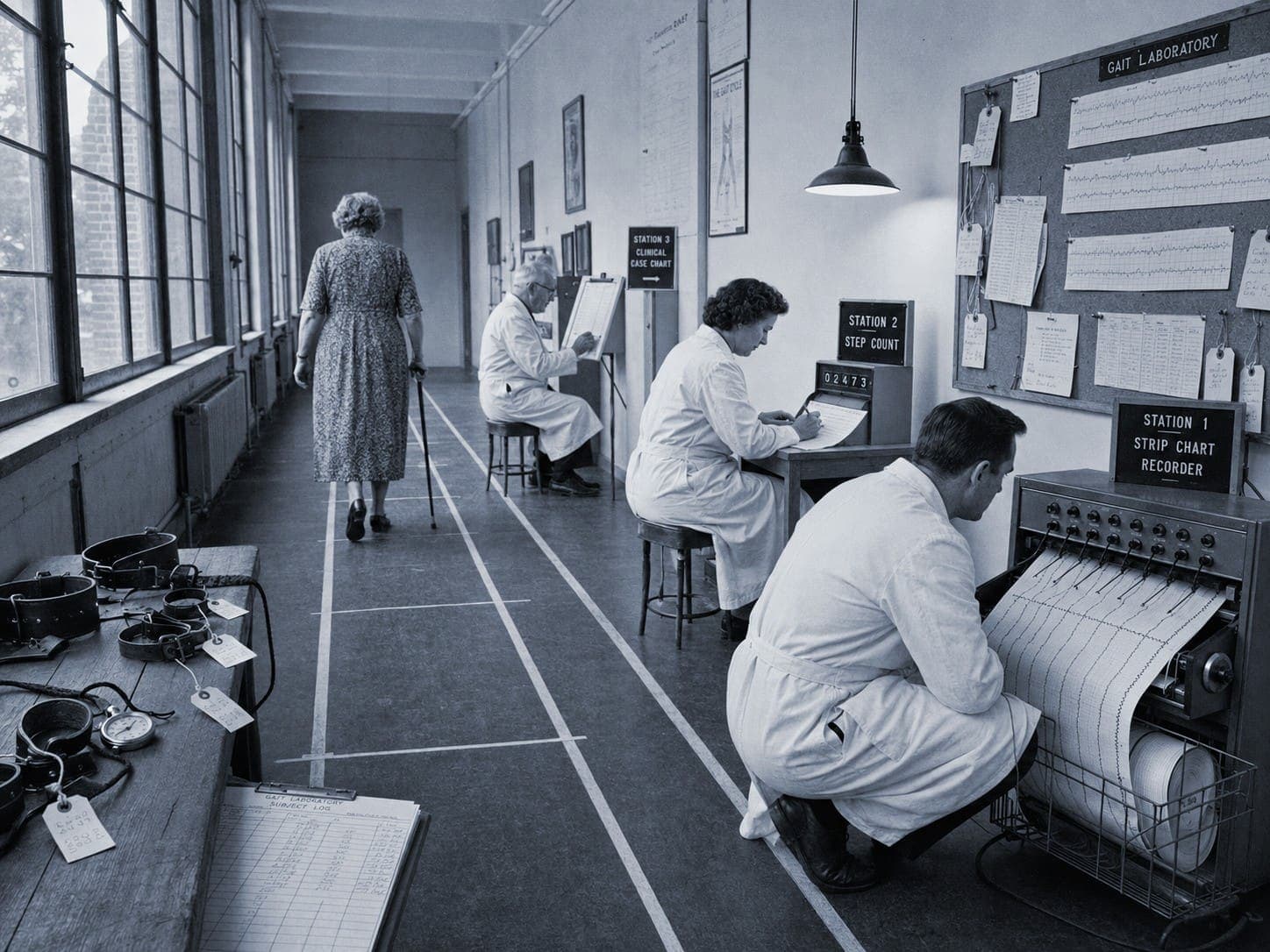
From Digital Measurement to Regulatory Evidence
FDA's cross-center paper, published on 20 August 2026, provides a coherent framework for linking digital measurement technologies to regulatory-grade clinical evidence. A virtual public workshop on 27 August will examine the associated statistical and methodological considerations for digitally derived endpoints in clinical trials of drugs and biological products.

Diana Hohage
Principal Consultant
In brief
FDA's paper on digitally derived measures separates verification, analytical validation and clinical validation, places the clinical question ahead of technology selection, and scales the required evidence to the regulatory role of the endpoint. With the 27 August 2026 workshop on the statistical questions.
Digital health technologies (DHTs) are increasingly embedded in clinical development. Wearables, smartphone-based applications, contactless sensors and algorithmic software can collect health-related data continuously, remotely and at a level of granularity that conventional site visits may not provide. Used appropriately, these technologies can reduce participant burden, support decentralized data collection and reveal patterns that may otherwise remain unobserved.
Their use does not, however, reduce the evidentiary burden. On the contrary, it requires a disciplined account of how a raw signal becomes a clinical measure and how that measure supports the conclusion drawn from a clinical investigation. FDA's Key Considerations for the Development and Use of Digitally Derived Measures for Clinical Investigations addresses this issue directly. The paper was jointly published by CBER, CDER, CDRH and the Oncology Center of Excellence (OCE).
The document does not establish a new regulation or stand-alone FDA guidance. Instead, it consolidates considerations from existing FDA guidances for the development and use of digitally derived measures (DDMs) as outcomes in clinical investigations. Its practical contribution is to set out an end-to-end evidentiary pathway: from a patient-relevant health concept, through the technology and processing methods used to generate data, to the DDM and the specific regulatory role it is intended to serve.
DHT and DDM: related, but not interchangeable
FDA defines a digitally derived measure as a measure derived from data collected using a DHT. A DDM may function as a clinical outcome assessment (COA), a biomarker or a component of a multimodal endpoint. The DHT is the underlying system of computing platform, connectivity, software and/or sensors used for health-care or related purposes.
This distinction is central. Evidence that a sensor performs reliably, that software meets technical specifications or that a product is already available on the market does not, by itself, establish that a particular DDM is appropriate for a particular clinical investigation. A sensor may accurately record acceleration, for example, while a downstream algorithm performs differently in people with altered gait, tremor, arrhythmia or other disease-specific characteristics. Equally, a technically accurate output may still lack a sufficiently supported relationship to the clinical concept or meaningful aspect of health that the study seeks to assess.
Fit for purpose applies to the complete DHT, algorithm, DDM and study-use combination, rather than to the device or software product in isolation.
FDA's evidence architecture
FDA separates the evidence case into verification, analytical validation and clinical validation. These concepts answer different questions and should not be compressed into the undifferentiated assertion that a wearable, digital biomarker or algorithm has been "validated."
| Evidence element | Core question | FDA's evidentiary focus | Illustration using walking data |
|---|---|---|---|
| Verification | Does the DHT measure the relevant physical or chemical parameter accurately and precisely? | Objective evidence that the parameter defining the DDM, such as acceleration, temperature or pressure, is measured accurately and precisely. | The accelerometer captures acceleration values reliably. |
| Analytical validation | Does the selected DHT appropriately assess the relevant clinical event or characteristic in the intended population? | Objective evidence that the DHT appropriately assesses the event or characteristic; suitable reference measures may be used where available. | Step count or stride parameters derived from the signal correspond acceptably to a reference measure in patients with cardiovascular disease. |
| Clinical validation | Does the DDM measure the intended concept at a clinically meaningful level? | Evidence that the DDM measures what it purports to measure conceptually, reflects a meaningful aspect of health and tracks changes in disease or clinical status. | Walking-bout length distinguishes relevant disease-status groups or reflects changes in ambulatory function. |
Table 1. Summary of the verification and validation concepts presented in FDA's August 2026 paper.
FDA's walking-bout example is instructive. The DHT first captures acceleration, which is converted into step count. FDA describes verification of the acceleration measurement and any associated AI algorithm, analytical validation of the resulting step count against a reference measure in the target population, and clinical validation of the derived walking-bout length in its intended context of use. The example demonstrates that reliable acquisition of a signal does not automatically establish the validity or clinical significance of a higher-order outcome measure.
The evidence base may also be distributed across organizations. FDA notes that, where appropriate, sponsors may rely on verification data made publicly available by a DHT manufacturer or other third party, or made available through a right of reference. This makes access to technical documentation, software-version records and supplier change notifications an integral part of the broader evidence strategy.
Define the clinical question before selecting the technology
FDA places clinical rationale ahead of technology selection. Development should begin by defining the meaningful aspect of health, the concept of interest, the target population and the context of use. A meaningful aspect of health is a specific aspect of feeling or functioning in daily life that matters to patients. A concept of interest is the clinical, biological, physical or functional state, or experience, that an assessment is intended to capture or reflect. The two may overlap, but they are not necessarily identical.
This sequence is more than a matter of terminology. It obliges developers to articulate why a particular DDM is relevant in the disease context, what incremental value it offers, how and when data will be collected, which clinical event or characteristic it is intended to represent, and how changes in the measure will be interpreted. FDA recommends developing a justification for the relationship between the proposed DDM and meaningful aspects of health, and refining that justification as the evidence base matures. A conceptual model can be particularly helpful when several features of the same behavior, for example walking frequency, bout definition, bout length or gait speed, might plausibly be measured.
Where a direct reference measure is available and captures the same construct, the paper points to correspondence analyses appropriate to the scale of measurement. For novel concepts, an adequate direct reference measure may not exist. In those circumstances, FDA encourages early discussion with the relevant review division on how to support the DDM's rationale and validity. The absence of a conventional comparator should not be treated as either automatic validation or automatic disqualification.
The strength of evidence should reflect the endpoint's regulatory role
The FDA paper adopts a risk-based approach. The required scope and depth of validation depend on the existing evidence base and the DDM's intended use, including its context of use and role in the clinical investigation. FDA provides a clear illustration: a DDM intended to serve as a primary endpoint in a pivotal study is expected to have prospective validation with pre-specified performance thresholds in the intended target population. By contrast, a DDM used as an exploratory endpoint may be supported by retrospective or bridging evidence.
This example should be read as an application of proportionality, not as a uniform validation formula. The same DDM may require materially different evidence depending on the patient population, the study design, the data-collection schedule and the consequence of an erroneous measurement for the regulatory decision.
The same principle is relevant to AI-enabled DDMs. FDA states that developers might consider a credibility assessment that is proportionate to model risk in the proposed context of use. The associated FDA document on AI is a January 2025 draft guidance for drug and biological products. It is explicitly not for implementation and presents non-binding recommendations for a risk-based credibility assessment framework. It should therefore be cited as a relevant proposed approach, not as a settled universal requirement for every AI-enabled DDM or medical device.
Usability, data completeness and measurement conditions are part of the evidence case
Once a DHT generates clinical-study data, usability becomes an evidentiary consideration rather than a purely design-related matter. FDA states that validation evidence should demonstrate that users understand and can follow instructions for use, typically through human-factors or usability studies. The scope and rigor of this work should be proportionate to the DDM's regulatory role and to the characteristics of the intended population. Sensory, cognitive, language and motor capabilities, as well as user burden, adherence, sustained usability and fatigue, can all affect whether the resulting data faithfully represent the intended measurement.
FDA also states that, when a DHT may be used remotely, measurements obtained remotely should be compared with measurements obtained using the same DHT in a clinical setting, with any differences appropriately justified. Calibration processes, where relevant, require their own evaluation. The operational conditions of data collection therefore form part of the credibility of the clinical evidence; they are not merely an implementation detail to be addressed after endpoint selection.
Data completeness and data quality require equal attention. FDA identifies missing and variable-quality data as analytical-validation considerations. Sponsors should assess how much data are needed to generate a reliable DDM estimate, including the implications of recording duration, unobserved time periods and study dropout. The paper also highlights sensor noise, use error, interactions between the user and the technology, environmental conditions, incorrect wearable placement, event misclassification and version changes as potential sources of error.
| Evidence risk | Potential implication | Illustrative control or evidence activity |
|---|---|---|
| Incorrect placement, calibration or use | Biased or imprecise DDM values | Human-factors testing, training, a validated calibration process and protocol-defined use checks. |
| Remote versus clinical setting | Limited comparability across settings | Comparative evaluation with the same DHT and a reasoned explanation of observed differences. |
| Insufficient wear time, data gaps or dropout | Unreliable DDM estimation and uncertainty around the endpoint | Pre-specified data-quality thresholds, justified aggregation rules and analysis plans that address missing data. |
| Algorithm, operating-system or platform update | Loss of comparability between data collected before and after the change | Version traceability, impact assessment and, where the measurement may be affected, validation using existing data or a new prospective study. |
| Target-population differences | Performance evidence may not transfer from healthy users or another disease population | Analytical-validation evidence in the specified target population, commensurate with the intended use. |
Table 2. Practical synthesis of FDA's discussion of usability, potential error sources and technology updates; it is not an independent FDA checklist.
Change control must be managed as an evidence issue
Digital measurement systems can evolve during a clinical investigation. FDA identifies changes to DHTs, associated technologies, general computing platforms and AI algorithms, including operating-system updates, as potential sources of measurement error. Sponsors and other relevant parties should ensure that the DHT remains fit for purpose and that updates do not affect the DDM. Where an update may affect the measurement, FDA indicates that post-update validation may be helpful, for example using previously collected data or a new prospective study.
The paper does not prescribe a bridging study for every software change. It calls instead for a defensible assessment of whether the change could alter the measurement, followed by an evidence response proportionate to that risk. Maintaining a traceable configuration baseline for the device, firmware, application, operating system, algorithm and analytical pipeline is therefore essential to preserving the interpretability of longitudinal data.
The next discussion: statistical considerations for digitally derived endpoints
On 27 August 2026, FDA will host a free virtual public workshop, convened by the Duke-Margolis Institute for Health Policy under a cooperative agreement with FDA, entitled Statistical Considerations for Digitally-Derived Endpoints in Clinical Trials. The workshop is specifically focused on clinical trials of drug and biological products, rather than FDA-regulated investigations in general, and is scheduled from 9:30 a.m. to 3:45 p.m. Eastern Time.
The published agenda makes the practical connection to the cross-center DDM paper explicit. Sessions will consider data provenance, approaches to gaps in remote-monitoring data, analytical and clinical validation, data standardization, novel analytical methods, and statistical challenges in analysis and regulatory review, including missing data. A separate session addresses continuous-glucose-monitoring (CGM) technical specifications as a model for regulatory submissions, device-performance assessment and analytical best practice.
The workshop should not be portrayed as establishing new requirements before it has taken place. Its stated purpose is to discuss methodological and statistical considerations, review experience and best practices. Nevertheless, the agenda reinforces an important point: demonstrating that a DDM is valid is only one aspect of endpoint readiness. Estimands, data provenance, completeness, aggregation, within-patient evidence, assumptions regarding missing data and interpretability must also be addressed where the DDM is intended to support a treatment-effect conclusion.
Relevance for global development programs
The FDA paper does not amend European legal requirements. The Medical Device Regulation (MDR) and In Vitro Diagnostic Medical Device Regulation (IVDR) are EU regulations. ISO 14155:2026, by contrast, is an international standard for good clinical practice in clinical investigations of medical devices involving human subjects. It covers the design, conduct, recording and reporting of such investigations and is not directly applicable to IVDs, although relevant elements may be considered where national or regional rules permit.
For programs conducted under European requirements, the FDA paper should therefore not be presented as creating an additional EU obligation. Its value is as a non-binding evidentiary framework for evaluating the measurement chain where a DHT-derived output supports a claim concerning safety, performance, clinical benefit or treatment effect. The applicable European and national requirements remain dependent on the product's regulatory status, intended purpose, claims and study design.
Conclusion
FDA's August 2026 paper does not add a new regulatory layer for wearables, sensors or artificial intelligence. It clarifies the evidence expected to connect the patient-relevant health question, the context of use, the DHT, the algorithmic processing, the DDM and the role of that DDM in a clinical investigation.
A technically reliable sensor does not automatically yield an analytically valid measure. An analytically valid measure does not, in turn, establish clinical meaning. Even a clinically validated DDM requires evidence proportionate to the regulatory decision it is intended to inform. As digital technologies increasingly mediate the relationship between patients and clinical evidence, the measurement system itself becomes part of the regulatory evidence system.
Image notice: The illustrative and header images were generated using AI and do not depict real people, places, or events. The portrait photographs show real people.
Relevant for your project?
Similar questions in your current project?
In a first call we clarify what is specifically relevant for your situation, without obligation.
Request a call →Life Science Journal
Regulatory updates, straight to your inbox.
New requirements, authority decisions and practice notes. Once a month, unsubscribe any time.
Regulations & standards considered
- FDA, Key Considerations for the Development and Use of Digitally Derived Measures for Clinical Investigations (August 2026)
- FDA, Digital Health Technologies for Remote Data Acquisition in Clinical Investigations (Final Guidance, December 2023)
- FDA, Considerations for the Use of Artificial Intelligence To Support Regulatory Decision-Making for Drug and Biological Products (Draft Guidance, January 2025)
- Regulation (EU) 2017/745 (MDR)
- Regulation (EU) 2017/746 (IVDR)
- ISO 14155:2026 (Clinical investigation of medical devices for human subjects, good clinical practice)
FAQ
Frequently asked questions
Related expertise
Clinical & Medical Affairs →
Endpoint selection and evidence strategy, into which a digitally derived measure has to fit
Software as a Medical Device →
Software lifecycle and version control, on which the comparability of the data depends
Usability Engineering →
Human-factors evidence, which this paper treats as part of the validation case
Related projects
All case studies →
Sources
- FDA, Key Considerations for the Development and Use of Digitally Derived Measures for Clinical Investigations, August 2026
- FDA, Digital Health Technologies (DHTs) for Drug Development
- Duke-Margolis Institute for Health Policy / FDA, Statistical Considerations for Digitally-Derived Endpoints in Clinical Trials: Draft Agenda, 20 August 2026
- FDA, Digital Health Technologies for Remote Data Acquisition in Clinical Investigations, Final Guidance, December 2023
- FDA, Considerations for the Use of Artificial Intelligence To Support Regulatory Decision-Making for Drug and Biological Products, Draft Guidance, January 2025
- Regulation (EU) 2017/745 (MDR), Regulation (EU) 2017/746 (IVDR)
- ISO 14155:2026, Clinical investigation of medical devices for human subjects, Good clinical practice
Related insights
All insights →


Your project
Have a concrete project?
Briefly outline your situation. We'll respond with an initial assessment, usually within one business day.
Prefer direct? +41 61 271 23 80
info@theentourage.ch
- Reply usually within one working day
- 4 offices: DE · CH · IT · US
- 100% life sciences